News
Energy is Ammunition: Why War Made Batteries a Strategic Asset
Conflict accelerates reality. For the past decade, the global transition to battery power was marketed primarily as an environmental initiative. Today, that narrative is dead.
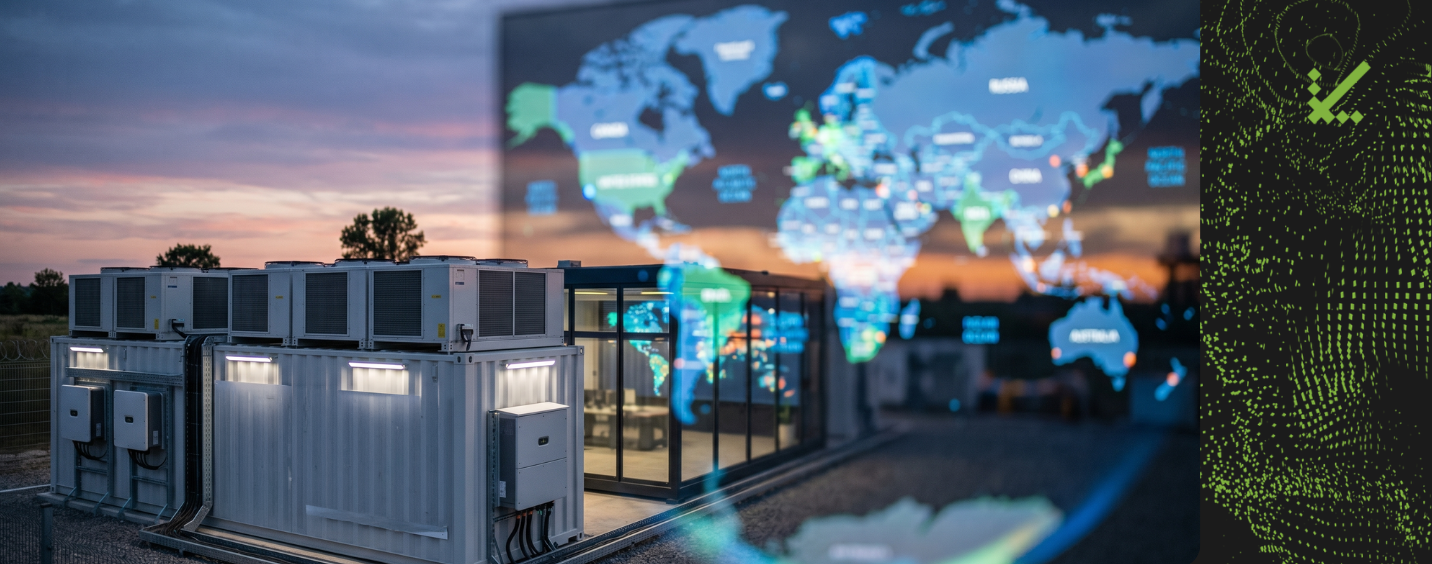
In the wake of compounding global conflicts, from Eastern Europe to the Middle East, the conversation has violently shifted from sustainability to sovereign survival. Batteries are no longer just commercial components for EVs, BESS etc., they are strategic national assets.
Here is how global conflict is fundamentally rewiring the battery industry.
1. The Weaponization of Chokepoints
War exposes the fragility of hyper-globalized supply chains. When global trade routes are contested, reliance on concentrated critical minerals becomes a massive national security liability.
The Vulnerability: Historically, the battery industry relied heavily on Nickel (heavily concentrated in Russia) and Cobalt (plagued by geopolitical instability in Africa). Sanctions and trade wars can instantly sever access to these materials.
The Shift: This geopolitical friction is driving a massive, accelerated pivot toward Lithium Iron Phosphate (LFP) chemistries. LFP bypasses the nickel and cobalt chokepoints entirely, relying on more abundant, widely distributed materials. It is a chemistry built for supply chain resilience.
2. Decentralization as Defense
If you want to cripple a nation, you target its energy grid. We have seen centralized power plants and transmission lines become primary kinetic targets in modern warfare.
The Strategic Flaw: A centralized grid is a single point of failure. When a power plant goes down, entire regions go dark.
The Battery Solution: Battery Energy Storage Systems (BESS) are shifting from grid support to grid defense. By distributing high-capacity energy storage across municipalities, hospitals, and industrial hubs, you create a decentralized microgrid network. You cannot take down a grid that is distributed across thousands of independent storage nodes.
3. The End of “Just-in-Time” Energy
Historically, wars have weaponized the price of fossil fuels. An embargo or a blocked strait can quadruple the cost of diesel and natural gas overnight, paralyzing economies and heavy industries.
The Reality: Electrons don’t need to be shipped through contested waters every day. Once renewable energy infrastructure and battery storage are in place, the marginal cost of energy generation and storage is highly localized and immune to foreign embargoes.
The Result: Governments are aggressively subsidizing local battery manufacturing. This isn’t just about jobs, it is an arms race for energy independence.
The Bottom Line: Sovereignty Requires Storage
The era of relying on adversaries for critical energy components is over. The nations and industries that will thrive in this volatile geopolitical climate are those that control their own energy supply chains: from raw material to cell manufacturing to final deployment.
This geopolitical reality is exactly why we pioneered localized LFP cell manufacturing in Europe. True energy independence doesn’t come from trading reliance on foreign oil for reliance on foreign battery cells. It comes from building secure, scalable, and resilient energy storage close to home.
In a volatile world, localized energy storage isn’t just an infrastructure upgrade. It is the ultimate strategic defense.