News
Europe’s EV Battery Dilemma: Green Transition or Geopolitical Trap?
Europe is currently caught in a strategic trap of its own making.
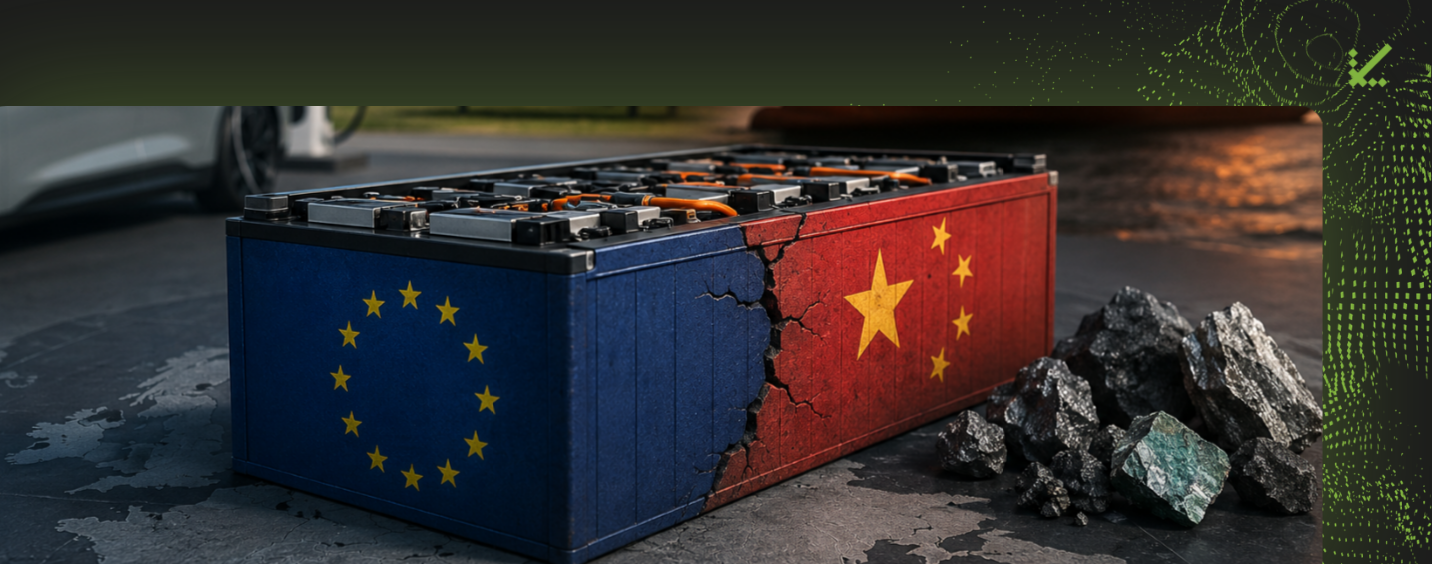
Over the past decade, the global shift toward electric mobility has fundamentally transformed the battery industry into one of the most strategically critical sectors of the 21st century. For Europe, however, this transformation is not just an economic opportunity – it is a massive structural challenge shaped by aggressive climate ambitions, glaring industrial vulnerabilities, and deep geopolitical dependence.
Here is the brutal math behind Europe’s current position.
1. The Regulatory Hammer The European Union has mandated an uncompromising transition, placing immense pressure on its automotive sector to decarbonize. Driven by the “Fit for 55” framework and the European Green Deal, the region is targeting a 55% reduction in greenhouse gas emissions by 2030, with the ultimate goal of absolute climate neutrality by 2050.
-
The Penalty: Automakers face severe financial penalties if they exceed strict CO2 limits.
-
The Ultimatum: By 2035, every new car and vehicle sold in the EU is required to have zero tailpipe CO2 emissions.
This top-down regulatory push is forcing a rapid industrial transition, placing heavy pressure on automakers to manufacture and sell EVs at an overwhelming pace.
2. The Strategic Vulnerability You cannot mandate a transition without controlling the underlying hardware. By forcing a massive pivot to EVs without first securing an independent, localized battery supply chain, Europe risks trading its historical reliance on foreign oil for a new reliance on imported battery cells and critical minerals.
-
The Reality: When climate policy outpaces industrial capacity, it creates a strategic vacuum. If European automakers are entirely dependent on foreign supply chains to meet European climate mandates, the continent effectively outsources its industrial sovereignty.
3. The Path to Sovereignty True energy independence requires building secure, scalable, and resilient energy storage close to home. The geopolitical friction created by Europe’s regulatory mandates is exactly why localized battery manufacturing is no longer an optional infrastructure upgrade – it is a matter of sovereign survival.
To break this dependence, the European strategy must pivot toward resilient chemistries like Lithium Iron Phosphate (LFP). LFP bypasses the critical mineral chokepoints of legacy nickel and cobalt systems, relying on materials that can be sourced and processed with far greater security.
The Bottom Line Europe’s aggressive decarbonization targets have successfully accelerated the EV market, but hitting zero tailpipe emissions by 2035 means nothing if the continent loses its automotive industry and strategic autonomy in the process. The only way out of the dilemma is to build the hardware locally.
Inspiration for the text: moderndiplomacy.eu